
Mould on the ceiling: why it grows and when it means a building problem
Summary
Mould on a ceiling is a moisture problem that happens to show up on the ceiling. A spray bottle removes the stain, and the water that fed it is still there. WA Health's mould guidelines list condensation from steam, rain leaking into roofs and internal plumbing leaks among the sources of the water behind indoor mould. This guide deals with those three: condensation, where moist indoor air meets a cool ceiling; rain getting in through the roof; and a plumbing or waterproofing leak from above. Each one leaves different clues and needs a different fix.
This guide covers what Australian health departments say about the health side, how to read the pattern before you clean, how to clean a small patch safely, and when it's worth having the ceiling and roof space looked at properly.
On this page
Is ceiling mould harmful? Usually mild for most people, with some at higher risk
For most people a small patch of ceiling mould is unlikely to cause serious harm, though it can bring on symptoms in people who are sensitive to it. NSW Health says most people will not experience any health problems from contact with mould, and that everyone breathes in mould spores with most people having no symptoms. Where people do react, NSW Health lists a runny or blocked nose, eye and skin irritation and sometimes wheezing, and says inhaling spores can trigger an asthma attack in someone with asthma.
NSW Health names the people at greater risk: anyone with asthma, allergies or another breathing condition, people with weakened immune systems, and people with chronic lung diseases such as COPD and emphysema. If anyone in your household has health problems after contact with mould, its advice is to see your doctor.
This guide sticks to the building side. It can't tell you whether a symptom comes from mould, and NSW Health notes that symptoms alone are not a reliable indicator of mould.
Condensation, roof leak or plumbing leak: read the pattern before you clean
Before you wipe anything, take photos of the mould and note where it is, its shape, and when you first saw it. That record is what separates the three causes, and cleaning wipes it away.
Condensation forms when humid air meets a cooler surface, and the Australian Government's Your Home guide lists ceilings among the surfaces it forms on. Your Home also explains that thermal bridges give cold a direct path to interior surfaces, which raises the condensation risk. WA Health's mould guidelines list steam from showering and cooking without proper use of exhaust fans as a cause. As a rule of thumb, condensation mould follows the steam and the cold, so it tends to show as spotting across an area in the room where the moisture is made.
Leaks put liquid water into the ceiling instead. WA Health lists rainwater leaking into roofs and internal plumbing leaks as separate sources of the water behind indoor mould. As a rule of thumb, a leak starts at one point, so the mark tends to grow outward from a single spot, and timing is a useful clue: a stain that changes after rain suggests the roof; one that changes when the shower or taps above are used suggests plumbing or waterproofing.
Two cases blur the lines. Your Home notes that significant condensation can form at night on the underside of metal roofing. As a rule of thumb, without a membrane to drain it, that water can drip onto the ceiling and look like a leak. NSW Health also notes that some mould contamination may be present in cavities or the ceiling, so what you see below may be the smaller part of the problem.
| Item | Condensation | Roof or flashing leak | Plumbing or waterproofing leak |
|---|---|---|---|
| Where it shows | Rooms where steam is made, such as bathrooms, laundries and kitchens, and colder parts of the ceiling | Ceilings directly under the roof | Under a bathroom, laundry, kitchen or pipe run above the ceiling |
| Shape (rule of thumb) | Spotting spread across an area | A mark that grows outward from one point | A mark that grows outward from one point |
| Timing (rule of thumb) | Builds after showers and cooking, and when the ceiling surface is cold | Appears or grows after rain | Can appear in dry weather and changes with use of the fixtures above |
| What fixes the cause | Exhaust ducted outdoors, less steam, warmer surfaces | Roof repair by a builder or roof specialist | Repair by a plumber; a failed shower or wet-area membrane needs re-waterproofing |
Scroll sideways to see the whole table
The bathroom ceiling: check the exhaust fan and where it vents
On a bathroom ceiling, start with the exhaust fan, because every shower puts steam into a small room. NSW Health advises turning exhaust fans on, particularly when bathing, showering, cooking, doing laundry and drying clothes.
Where the fan sends the air matters as much as whether it runs. Your Home suggests venting bathroom, laundry and kitchen exhaust directly outdoors. It also notes that the National Construction Code includes condensation provisions for new buildings, among them requirements for exhaust systems. Those requirements are aimed at new homes, so an older house may have a fan that was never ducted outside.
Checks you can do yourself: run the fan and hold a sheet of tissue near the grille to see whether it pulls air; check whether the grille and fan are clogged with dust; and, only if the roof space is safe to look into, see whether a duct runs from the fan to an outside vent or stops short in the roof space. Leave the fan's wiring and any roof-space work to a qualified tradesperson.
For finishes, fittings and layout choices that keep a bathroom drier, see the healthy bathroom guide.
Cleaning a small patch safely: what the health departments advise
A small, new patch in one spot can usually be cleaned by the household. WA Health's guidelines treat mould as a simple problem, which occupants can often handle with the right protective equipment, when it is new, isolated and visible, covers no more than 1 square metre, is unlikely to affect the air conditioning or the building structure, any water that got in isn't highly contaminated, its cause can be easily identified and fixed, and no other hazard such as asbestos is involved. If the house was built before 1990, the Queensland Government says it may contain asbestos in its building materials, and asbestos that is disturbed or broken can release fibres that are a health risk when breathed in. In an older house, don't scrub, sand or scrape the ceiling until you know what it's made of. WA Health also advises that the cleaning shouldn't be done by anyone who may be affected by the mould, and its guidelines name people with respiratory conditions, allergies or weakened immune systems as being at high risk from exposure. WA Health describes the figure as an arbitrary size based on US EPA and World Health Organization recommendations.
Steps for a small ceiling patch:
- Protect yourself. WA Health recommends a P2 respirator mask, long gloves that reach the middle of the forearm, and goggles or safety glasses. Ceiling work puts your face under the mould, so goggles matter here.
- Ventilate to outdoors, not through the fan. Close the door to the rest of the house and open a window unless it's windy. WA Health advises not running air conditioners or exhaust fans while you remove the mould.
- Clean gently. WA Health recommends scrubbing mould with soapy water and cleaning 30 to 50 cm beyond the visible edge, to catch new growth you can't see yet. NSW Health suggests mild detergent, or vinegar diluted 4 parts vinegar to 1 part water.
- Keep the mould from spreading. WA Health advises against dry brushing, because it breaks the mould up into small fragments and releases spores.
- Dry it completely. NSW Health says to make sure the surface is dried completely once cleaned.
- Hold off on paint. WA Health says not to paint over, seal or cover surfaces until they are dry.
Plasterboard has limits. WA Health says mould can be difficult to remove completely from porous materials such as gyprock, because it grows into the material, and these items are often not worth salvaging. As a rule of thumb, a stain that comes straight back through fresh paint, or a sheet that is swollen or sagging, suggests the board itself is affected or the water is still getting in.
Plasterboard that has been wet by clean water but hasn't grown mould is a separate case. WA Health's table for responding to clean water damage says wallboard may be dried in place if there's no obvious swelling and the seams are intact; if not, remove and replace it. That applies to board you dry out quickly after a leak, not to board that is already mouldy.
Why ceiling mould comes back: the moisture source is still there
Ceiling mould comes back when the moisture behind it hasn't been dealt with. NSW Health says mould is likely to return unless you also treat the cause, and WA Health treats mould that keeps recurring as a complex problem.
Climate plays a part too. Your Home notes that condensation risk is not the same in all climates and changes with the time of year, and that in hot humid climates a highly air-conditioned home may have a greater risk of condensation inside building cavities, where humid outdoor air meets colder interior surfaces. Cool surfaces meeting humid air is the condition Your Home describes for condensation, so a ceiling under a cold roof on a cool night is exposed to it.
Prevention follows the cause. For condensation, Your Home suggests venting bathroom, laundry and kitchen exhaust directly outdoors, and in warmer climates a properly sized air conditioner or a purpose-made dehumidifier to bring humidity down. NSW Health adds opening windows when the weather allows and limiting unflued gas heaters. For leaks, NSW Health's advice is to repair water leaks and plumbing problems, including a leaking roof or a blocked gutter.
When to call someone: size, recurrence, a growing stain, health, buying or renting
Get the cause looked at when the mould is bigger than you should clean, keeps returning, or comes with a stain that's spreading. WA Health's guidelines class a mould problem as complex when it is larger than 1 square metre or found in several rooms, when it keeps recurring, when the cause is a fault in the building's design or structure, or when there are mouldy smells or unexplained illness with no visible mould, which suggests hidden growth.
The right person depends on the cause. WA Health notes that plumbers may be needed to find and fix plumbing leaks, and builders or roof specialists to fix leaks in the building structure. If anyone in the house is in one of NSW Health's higher-risk groups, it makes sense to act sooner.
If you're buying, a pre-purchase building and pest inspection is the time to ask about it. My building inspection list includes the roof interior, with framing, insulation and signs of leaks; internal walls, ceilings and floors; and wet areas, for signs of leaks or moisture damage.
If you're renting in Queensland, the minimum housing standards apply to all residential rental properties, when the tenant moves in and throughout the tenancy. The Residential Tenancies Authority says a rental must be free from vermin, damp and mould, except where the tenant caused it, and the roofing or windows must keep water out when it rains. Tell the property manager or owner as soon as mould appears. The RTA gives mould from a leaking roof as an owner repair, and mould from steam a tenant let build up without ventilating as the tenant's responsibility. This is general information, so check your situation with the RTA.
What a moisture and mould investigation adds: finding where the water comes from
An investigation is about finding the moisture source; a lab test on its own won't tell you that. NSW Health says that because most mould is visible, testing is generally not necessary, though some contamination may sit in cavities or the ceiling.
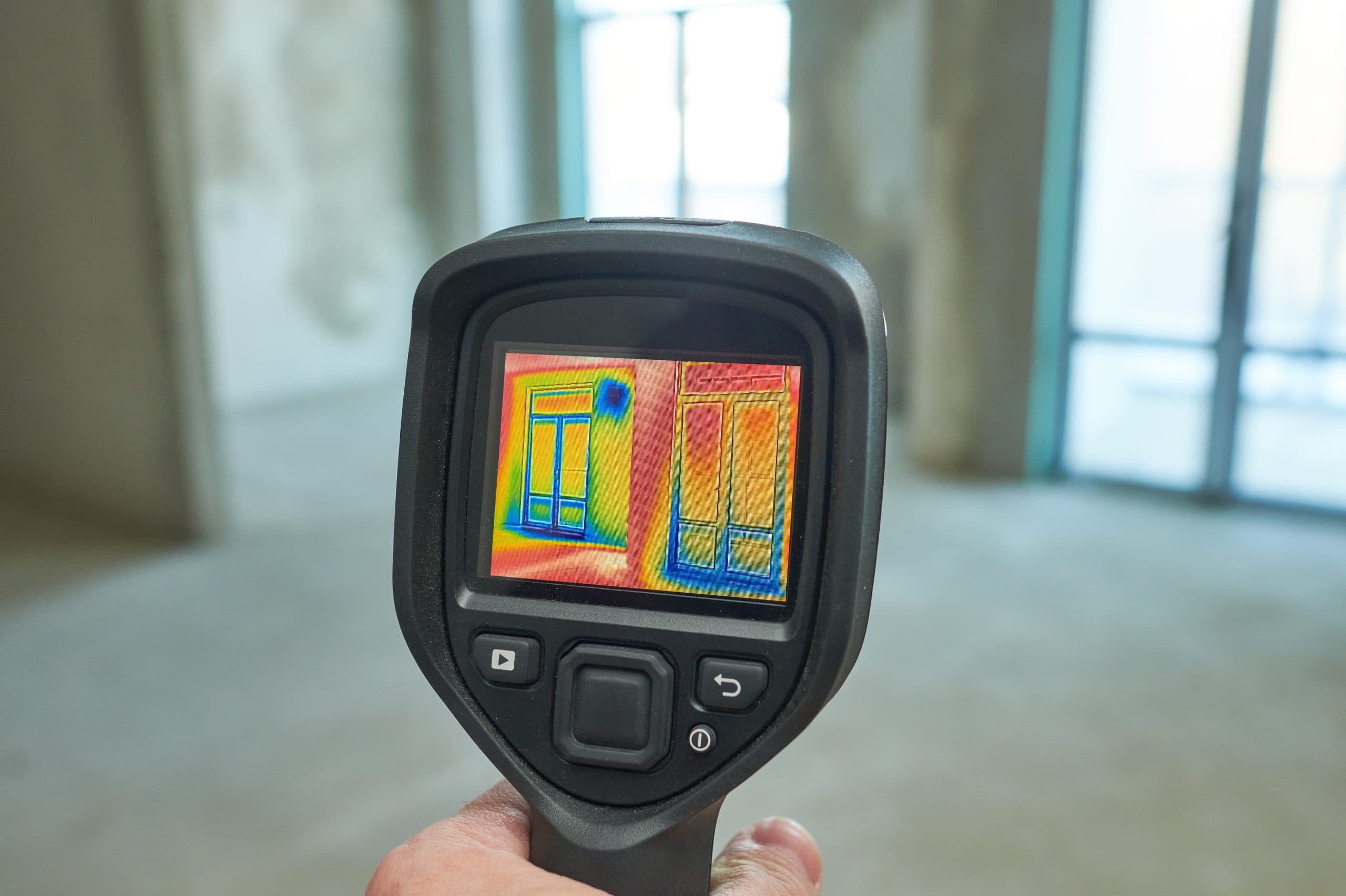
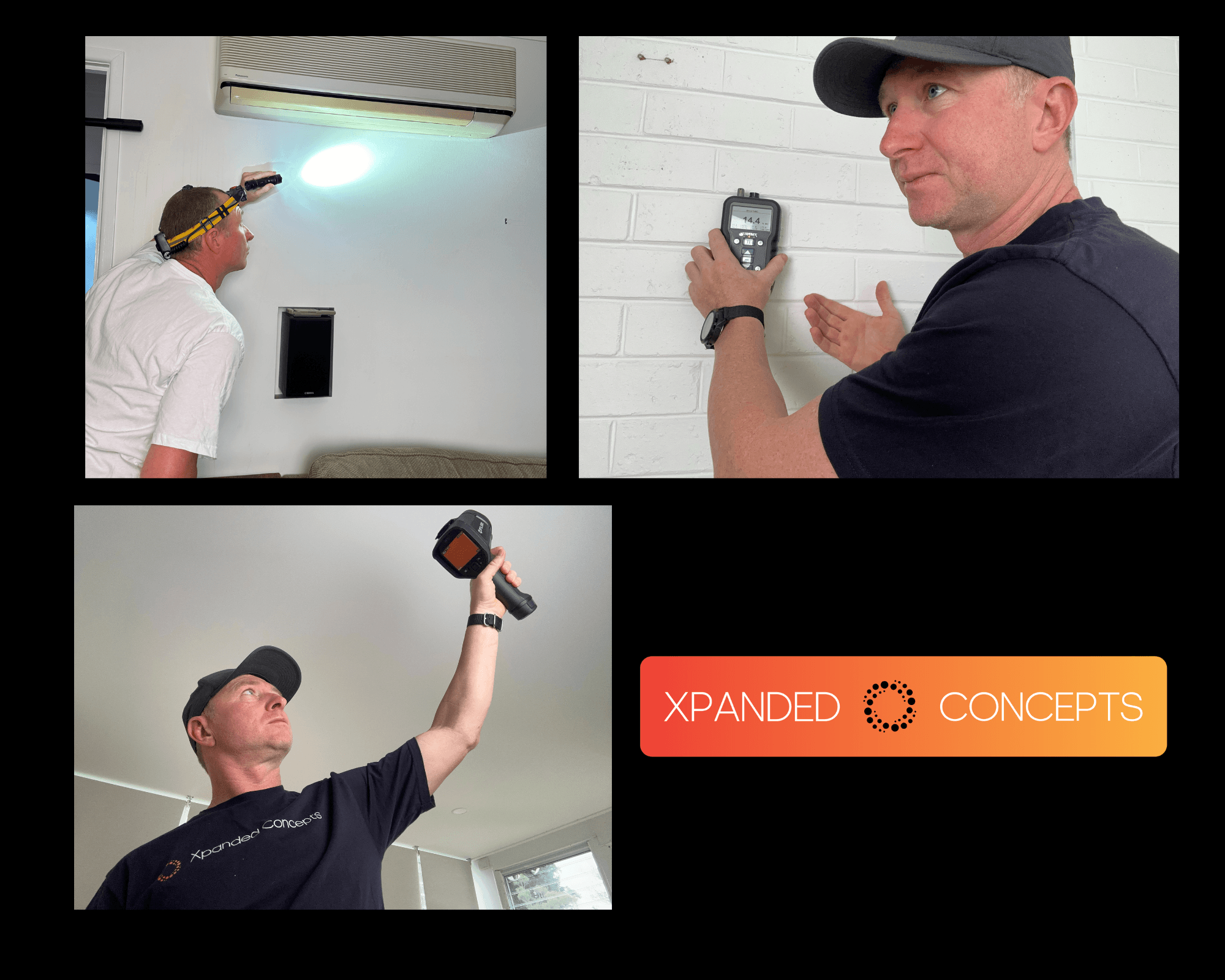
In my inspections I use a FLIR E6 Pro thermal imaging camera for thermal scanning and a Tramex Moisture Encounter MEX5 moisture meter for moisture detection. Where sampling is needed, samples go to an independent NATA-accredited laboratory. My Building Defect Inspection is set up to identify the cause of building defects and failures.
I'm a QBCC licensed builder and building inspector with over 28 years in the building industry, and a Building Biologist with an Advanced Diploma in Building Biology and Mould Testing Technician training through ACES. You don't need to be buying a property to book: homeowners can book a mould investigation directly. Read more about mould testing and analysis, or call me on 0401 527 667 to talk through what you're seeing.
Frequently asked questions
Is black mould on the ceiling more dangerous than other mould?
Not according to current public health evidence. WA Health's mould guidelines say "toxic mould" isn't defined in public health, and the science doesn't support a clear line between so-called toxic moulds such as Stachybotrys chartarum and other indoor moulds. Health effects are linked to the presence of mould and damp, not necessarily the type of spore. Treat ceiling mould of any colour the same way: find the moisture source, then clean or replace what's affected.
Should I use bleach or vinegar on ceiling mould?
Start with detergent and water, or diluted vinegar. NSW Health suggests mild detergent or vinegar mixed 4 parts to 1 part water for routine clean-up, with diluted bleach (250 mL in 4 litres of water) only when mould won't shift and the item can't be thrown out. WA Health says bleach can reduce mould growth but doesn't appear very effective at stopping it growing back, and it's not known whether vinegar beats soapy water. Never mix bleach with ammonia.
How big a patch of ceiling mould can I clean myself?
Up to about 1 square metre, if it's new, in one spot, the cause is easy to fix and no other hazard such as asbestos is involved, and if nobody doing the cleaning may be affected by mould. A house built before 1990 may contain asbestos, so don't scrub, sand or scrape the ceiling until you know what it's made of. That's the line in WA Health's guidelines. Bigger patches, mould in several rooms, mould that keeps returning or a cause rooted in the building fall into WA Health's complex category, where professional help may be needed.
Why does ceiling mould come back after I clean it?
Because the moisture that fed it is still there. NSW Health says mould is likely to return unless you also treat the cause. On a ceiling, that usually means steam that isn't being exhausted outdoors, a cold section of ceiling, or water getting in from the roof or a pipe above. Plasterboard can also hold growth inside the sheet, and WA Health says mould can be difficult to remove completely from porous materials like gyprock.
Is my landlord responsible for ceiling mould in Queensland?
It depends on the cause. Under Queensland's minimum housing standards, a rental must be free from damp and mould unless the tenant caused it, and the RTA says the owner is responsible where a structural problem such as a leaking roof causes the mould. A tenant who lets steam build up without ventilating may be responsible instead. Tell the property manager or owner as soon as it appears. This is general information; check your situation with the RTA.
Can cooler weather make ceiling condensation worse?
It can. Condensation forms when humid air meets a cooler surface, and Your Home notes that condensation risk changes with the climate and the time of year. A ceiling under a cold roof on a cool night, plus steam from showers and cooking in a closed-up house, gives condensation more chances to form. Your Home suggests venting bathroom, laundry and kitchen exhaust directly outdoors and keeping the home warmer in colder months.
Sources
Each source was checked on the date shown.