
Mould in walls: how to tell if it is inside the wall and what to do
Summary
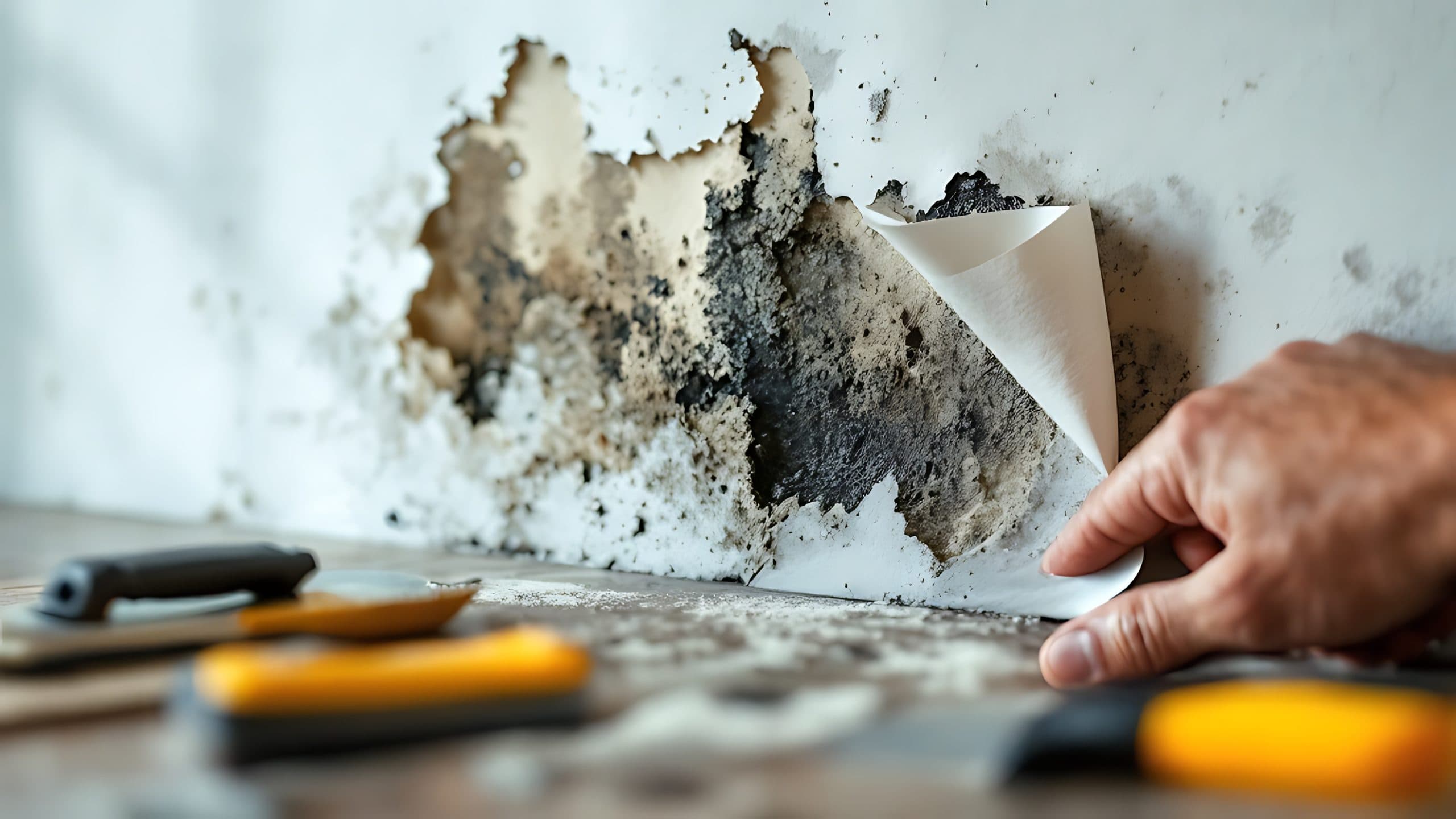
Mould on a wall is either growing on the paint because the room is damp, or it's the visible end of water getting into the wall from somewhere else. The two need different fixes. Surface mould comes off with cleaning and better ventilation. Mould fed from inside the wall keeps coming back until someone finds and fixes the water. I'm Ryan Mair, a Building Biologist and QBCC Licensed Builder with over 28 years in the building industry. This guide covers how to tell which kind you have, the Queensland building faults that feed mould inside walls, and what a thermal camera and moisture meter can and can't prove before anyone cuts into the plasterboard.
On this page
Surface mould or mould inside the wall: the signs that point inside
Mould that keeps returning to the same spot after a proper clean, even once ventilation has been improved, is a strong sign the moisture is coming from inside the wall, not from the air in the room. NSW Health says mould is likely to return unless you also treat the cause of the problem. Seeing mould tells you it is there. It doesn't tell you where its water comes from.
The Queensland Building and Construction Commission (QBCC) lists these as warning signs of failed waterproofing:
- peeling, bubbling or blistering paint
- silicone joints that peel or discolour
- discoloured or stained walls and ceilings
- damp patches that get worse after showers or rain
- loose tiles or crumbling grout
QBCC says these signs can indicate a larger underlying issue, even when they look minor at first. It also names a persistent musty smell or mould growth in bathrooms, laundries or adjoining rooms as one of the most common indicators, and says it often points to moisture trapped behind walls or floors.
Wet-area waterproofing and plumbing leaks
A failed shower or bathroom membrane wets the wall from the inside, and the mould can show up on the other side of that wall, in a bedroom, hallway or built-in robe. That fits QBCC's warning that the musty smell or mould can appear in rooms adjoining bathrooms and laundries. QBCC describes waterproofing in Queensland as regulated work for licensed professionals, and advises checking a contractor's licence and track record rather than relying on recommendations or gut instinct.
Membranes can also be damaged after they're installed. QBCC warns that DIY renovations, drilling or later work by other tradies can puncture membranes hidden behind tiles, so a towel rail or screen fixed through the tiles after the build is worth remembering when mould appears. These defects aren't cheap: QBCC reports that residential bathroom claims finalised under the Queensland Home Warranty Scheme in 2024-25 averaged almost $25,000 in rectification costs.
Plumbing inside the wall can feed mould too. NSW Health's list of water leaks and plumbing problems to repair starts with burst water pipes. Water from outside counts as well: the same list includes a leaking roof and blocked gutters.
Condensation and moisture at the base of the wall
Condensation can wet a wall cavity without any leak at all. The Australian Building Codes Board (ABCB) says condensation risk isn't confined to colder climates. Its example is the summer wet season of the humid tropics, when the air already holds so much water that a small drop in temperature is enough to trigger it, and it notes that the drop can come from cooling inside an air-conditioned interior. The ABCB doesn't apply that example to the Sunshine Coast. Closer to home, the Residential Tenancies Authority (RTA) notes that some areas of Queensland are more prone to mould than others because of the environment and time of year, and that the risk rises after severe wet weather. The ABCB warns that condensation hidden inside walls and roofs can build into water damage, decay and microbial hazards.
Moisture can also come up from below. NSW Health describes rising damp as ground moisture rising up a brick or stone wall, made worse by poor subfloor ventilation, and advises keeping the weep holes and air vents at the base of the home uncovered. Garden beds or paving that cover weep holes are worth checking for that reason. For walls that sit on a concrete slab, my kit includes a Tramex CME5, a moisture meter made for concrete.
Can you clean it yourself? Small surface patches, yes
Small patches of mould on a hard, painted surface can be cleaned at home. Mould that returns, spreads or sits in material you can't dry is a different job. For routine clean-up, NSW Health suggests a mild detergent, or vinegar diluted four parts vinegar to one part water, then drying the surface completely.
Stop and get help when:
- the mould comes back to the same place after cleaning, because NSW Health says it's likely to return unless the cause is treated
- the mould is in an absorbent material such as carpet, which NSW Health says may need to be professionally cleaned or replaced
- the material is soaked through, since NSW Health advises discarding building material that can't be cleaned and dried completely
NSW Health says people with asthma, allergies or other breathing conditions may be more sensitive to mould, which is worth weighing up before deciding who does the cleaning.
Painting over mould: it won't stop it
Painting over mould doesn't fix it, because paint does nothing about the water feeding it. NSW Health's advice is to remove mould as soon as it appears, make sure the surface is dried completely once cleaned, and treat the cause, because mould is likely to return otherwise.
If the mould is fed from inside the wall, a careful repaint only covers it for a while. Bubbling or blistering paint near a wet area is itself on QBCC's list of waterproofing warning signs, so a wall that needs repainting every year or two is telling you something about what's behind it.
Finding the source without opening the wall: what thermal and moisture readings can and can't prove
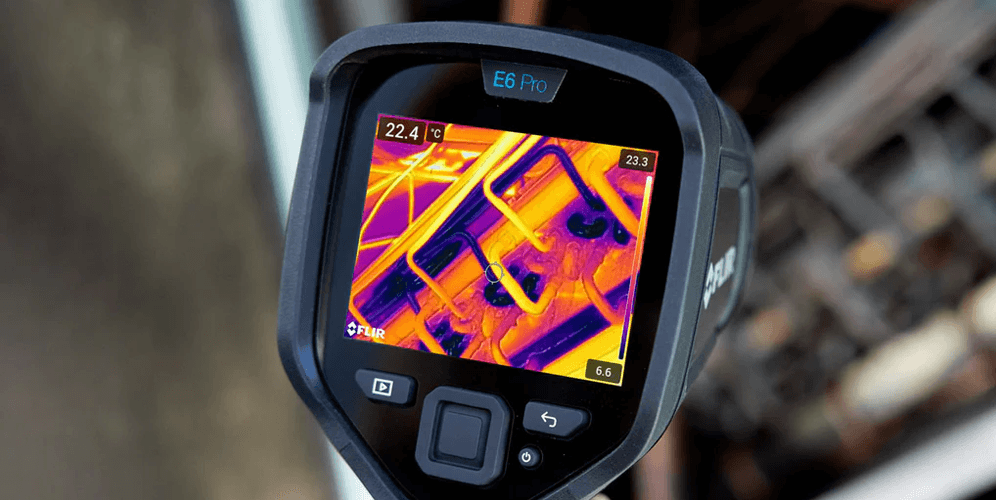
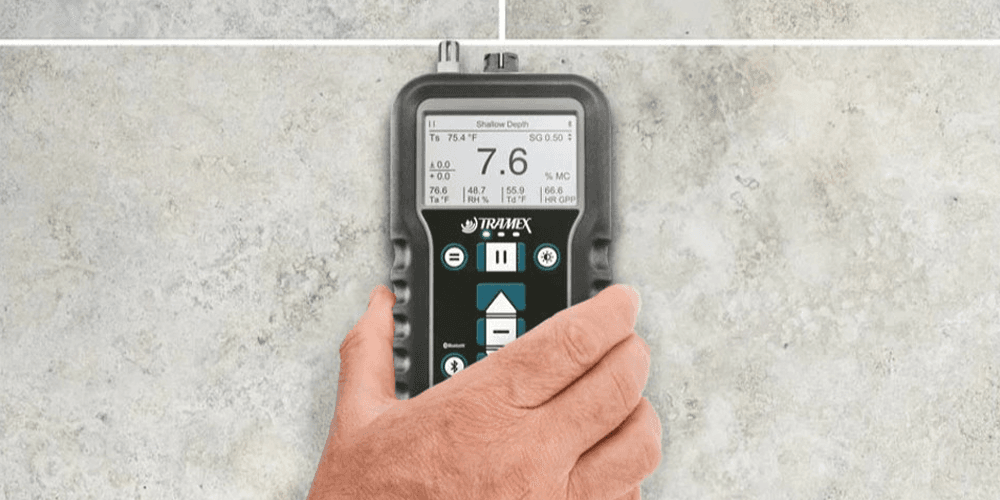
A thermal camera and a moisture meter can show that part of a wall is wet today and roughly how far the wet area spreads. Neither can see mould, and neither proves where the water came from. That's the honest limit of non-invasive testing, and it's why the two should be used together, with the meter checking what the camera shows.
Teledyne FLIR, which makes the FLIR E6 Pro thermal camera I use, says a thermal camera can't see moisture in walls. It detects subtle temperature differences and patterns that can reveal water, and it can help locate water and approximate how far the moisture extends. FLIR also says a pattern that looks like moisture doesn't guarantee water is there, because a temperature difference can have other causes. Its advice is to always confirm with a moisture meter, and it notes results can be affected by weather and indoor humidity.
That's the job of my Tramex MEX5 moisture meter: checking whether the area the camera picked out is actually damp.
| Reading | Can show | Can't prove |
|---|---|---|
| Thermal image (FLIR E6 Pro) | A temperature pattern on the wall surface that may be caused by water | That the pattern is water, or that mould is present |
| Moisture meter (Tramex MEX5) | Whether the area the camera picked out is actually damp, today | Whether mould is growing, or a leak that has since dried out |
| Both together | A wet area confirmed two ways, and roughly how far it spreads | The leak path, or whether mould is present and at what level, which takes sampling and laboratory analysis |
Scroll sideways to see the whole table
When mould testing helps, and when the next call is a tradesperson
Mould testing helps when you suspect mould you can't see; it adds little when the mould and its water source are already obvious. NSW Health says that because most mould is visible, testing generally isn't necessary, but some contamination may sit in cavities or the ceiling. It also says symptoms alone aren't a reliable indicator of mould, and suggests an occupational hygienist if you can't find the source. If anyone in the house is unwell, NSW Health's advice is to see your doctor.
When I do mould testing, the samples go to an independent NATA-accredited laboratory. Testing is done on-site across the Sunshine Coast, Brisbane and Gympie, and test kits are available Australia-wide. The mould testing page explains how it works.
If the readings point clearly at a shower or a pipe, the next call is a licensed tradesperson, and for a failed shower or bathroom membrane that should be a QBCC-licensed waterproofer. If you're not sure what has failed, a Building Defect Inspection is designed to identify the cause of building defects and failures before you pay anyone to fix the wrong thing.
Renting, owning or buying: who to tell
Who you tell depends on whether you rent, own recently built or renovated work, or are buying. This is general information, not legal advice.
Renting. The RTA says tenants must tell the property manager or owner about mould as soon as possible. If it's caused by a problem with the property, such as a leaking roof or pipes, the owner is typically responsible for cleaning it and paying for repairs, and in general tenancies that's an emergency repair. If it's caused by the tenant, for example by not using the bathroom exhaust fan, the tenant is typically responsible. Where nobody can tell the cause, the RTA suggests an external professional to inspect, and free RTA dispute resolution is available if you can't agree.
Owning newer or renovated work. QBCC's advice is to photograph the problem, make written notes and notify your licensed contractor in writing as soon as possible. If the issue can't be resolved, you may be eligible to claim under the Queensland Home Warranty Scheme, and QBCC says strict eligibility criteria, timeframes, limitations and policy conditions apply, so it pays to act early.
Buying. A building and pest inspection checks wet areas for signs of leaks or moisture damage. If mould is a worry, buyers can add a Building Biology Review, which is a non-invasive visual assessment, or Environmental Testing, where mould testing is the most commonly requested option.
Already own the home and not buying? You don't need a purchase inspection to get help. Homeowners can book the building biology and healthy home services, including mould testing, on their own.
Next steps
If mould keeps coming back on a wall, start with the cause. Read how mould testing works, see the Sunshine Coast building and pest inspections page if you're buying, or read the healthy bathroom and healthy laundry guides for ventilation habits that help keep surface mould down. To talk it through, call me on 0401 527 667 or send a message through the contact page.
Frequently asked questions
Can mould grow inside a wall without showing on the surface?
Yes. NSW Health notes that some mould contamination may be present in cavities or the ceiling, where you can't see it. QBCC says a persistent musty smell or mould in bathrooms, laundries or adjoining rooms often points to moisture trapped behind walls or floors. Other clues QBCC lists among the warning signs of failed waterproofing include bubbling or blistering paint, stained walls or ceilings, and damp patches that get worse after showers or rain.
Will painting over mould stop it?
No. Paint covers mould but does nothing about the moisture feeding it, and NSW Health says mould is likely to return unless the cause is treated. Fix the water source first. For routine clean-up of a small patch, NSW Health suggests a mild detergent or vinegar diluted four parts vinegar to one part water, then drying the surface completely, before you think about repainting.
Can a moisture meter find mould inside a wall?
No, a moisture meter finds moisture, not mould. Teledyne FLIR recommends always using a moisture meter to confirm what a thermal camera shows, because a pattern that looks like moisture doesn't guarantee water is there. A damp reading tells you there is moisture that mould could use; confirming mould itself takes sampling and laboratory analysis. If you can't find the source, NSW Health suggests an occupational hygienist.
Is mould behind a shower wall a waterproofing defect?
It can be, but it needs confirming. QBCC lists a persistent musty smell or mould in bathrooms, laundries or adjoining rooms as one of the most common signs of failed waterproofing. A leaking pipe inside the wall can cause similar mould. QBCC describes waterproofing as regulated work for licensed professionals, so repairs should be done by a QBCC-licensed waterproofer. If the work is recent, photograph it, notify your contractor in writing and act early, since QBCC says strict timeframes apply to Home Warranty Scheme claims.
Who fixes mould in a Queensland rental?
It depends on the cause. The Residential Tenancies Authority says mould caused by a problem with the property, such as a leaking roof or pipes, is typically the owner's responsibility, and in general tenancies it's an emergency repair. Mould caused by the tenant, for example by not using the bathroom exhaust fan, is typically the tenant's responsibility. Tenants must report mould as soon as possible, and free RTA dispute resolution is available if you can't agree.
Is mould inside walls harmful?
It can be for some people. NSW Health lists a runny or blocked nose, eye and skin irritation and sometimes wheezing, and says mould spores can trigger asthma attacks. It also notes most people have no health problems from contact with mould, while people with asthma, allergies or breathing conditions may be more sensitive. If anyone is unwell after contact with mould, see your doctor.
Sources
Each source was checked on the date shown.