EMF Testing & Exposure Reduction

Professional EMF testing, online consultations, meter hire, and practical solutions for healthier low-EMF living.

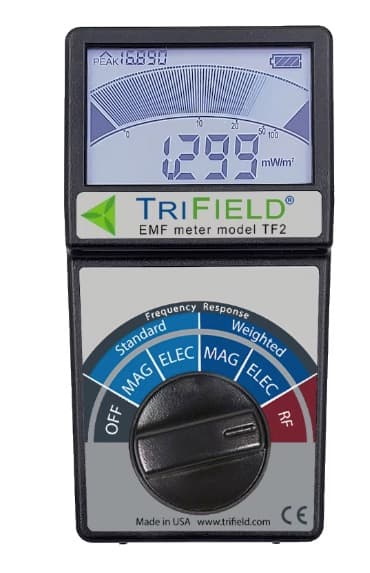
TriField TF2 EMF meter

Electro Magnetic Frequencies In The Home

Electromagnetic fields (EMFs) are an unavoidable part of modern life. From mobile phones, Wi-Fi, smart devices, and electrical wiring through to powerlines and telecommunications infrastructure, our exposure to man-made electromagnetic energy has increased significantly over recent decades. While this technology has brought enormous convenience, many people are becoming increasingly aware of the potential impact excessive or unnecessary EMF exposure may have on health, sleep, stress, recovery, and overall wellbeing, particularly within the home environment where we spend a large portion of our lives.

At Xpanded Concepts, our goal is not only to provide EMF testing, but to help educate and empower clients to better understand the modern electromagnetic environment we now live in. The EMF industry can often be confusing, highly polarised, and filled with conflicting information and questionable product claims. Our approach focuses on practical education, real-world testing, and evidence-informed strategies to help identify and reduce unnecessary exposure where possible. We also aim to help clients cut through the noise of the industry by providing honest, balanced guidance around EMF mitigation approaches, products, and technologies.

EMF pillar

EMF 101 - Learn about EMF

Confused by EMFs? This section breaks down the key concepts, exposure types and practical considerations to help you better understand what EMFs are, where they come from and how exposure can be reduced.

EMF 101 - Not All EMFs Are The Same

Types of EMF in The Home

One of the biggest misconceptions surrounding EMFs is the idea that all EMFs are the same thing. In reality, "EMF" is a broad umbrella term that includes multiple different types of electromagnetic fields, each with different sources, characteristics, measurement methods, and potential interactions within the environment. The 2 most commonly discussed forms of man-made EMFs within homes are:

Radio Frequency (RF) are wireless signals used for communication and data transmission. Common sources include Wi-Fi, mobile phones, Bluetooth devices, smart meters, cordless phones, and nearby telecommunications infrastructure such as mobile phone towers.

AC Magnetic Fields are generated when electrical current flows through wiring, appliances, and electrical systems. Common sources can include switchboards, wiring circuits, appliances, extension leads, and high-current electrical equipment.

Importantly, these different forms of EMFs are measured differently. Different meters, testing approaches, and assessment techniques are required depending on the type of field being evaluated. This is why professional EMF assessments often involve multiple specialised instruments and a broader understanding of how different EMF sources behave within the built environment.

Watch on YouTube (opens YouTube)

What's The Concern With EMF

One of the most important concepts to understand when discussing EMFs is that not all exposure is automatically harmful. In many ways, asking "Are EMFs dangerous?" can be an oversimplification, similar to asking whether sunlight, heat, or even food is dangerous. Context matters. Dose matters. Duration matters.

There are forms of electromagnetic energy that are a completely natural part of life. Sunlight, infrared heat, and many naturally occurring electromagnetic frequencies play important roles within nature and biology. However, as with many environmental exposures, the potential concern often comes down to intensity, proximity, and duration of exposure. The primary concern surrounding modern EMF exposure is generally not occasional short-term exposure to a single device. Rather, it is the increasing level of continuous, chronic exposure many people now experience within modern environments, often with very little downtime or recovery from wireless devices, electrical infrastructure, and technology operating around us 24 hours a day.

Are Safety Standards Actually Safe?

EMF exposure is an evolving area of research, with different organisations and standards focusing on different aspects of safety. Understanding how these standards are developed, and their limitations, can help provide context when assessing exposure within the home.

Current regulatory guidelines are largely based on short-term thermal effects, while some research and building biology guidelines also consider potential long-term, non-thermal biological effects.

A precautionary approach recognises this uncertainty, focusing on reducing unnecessary long-term exposure where practical, particularly in areas where you spend extended periods of time.

Watch on YouTube (opens YouTube)

Here's What We Know

  • Human exposure to man-made EMFs has increased dramatically
  • Modern environments now expose us to continuous, long-duration EMF exposure.
  • EMFs are not all the same. Different frequencies and field types behave differently and interact with the body and environment in different ways.
  • Current safety standards are primarily designed around preventing short-term thermal effects (heating effects), rather than fully understanding potential long-term biological interactions from chronic low-level exposure.
  • A substantial and growing body of scientific literature has identified biological effects and raised concerns regarding potential health impacts associated with certain forms of EMF exposure.
  • Historically it's taken decades to prove an environmental toxin is unsafe

Here's What I Think

  • I believe there is a very real possibility that long-term, chronic EMF exposure may contribute to biological stress or health impacts
  • Human variability differs enormously. Just as people respond differently to chemicals, allergens, mould, foods, or stress, I believe some individuals may be more susceptible or sensitive to EMF exposure than others.
  • Potential effects associated with EMF exposure are often subtle, non-specific, and easy to dismiss or attribute to many other factors.
  • I believe there is enough scientific uncertainty & evidence indicating potential biological effects to justify a precautionary approach.
  • EMF has not been proven safe & the burden of proof has been placed on proving it is not safe.
  • Eliminating all EMF exposure is neither realistic nor practical in the modern world. Technology is deeply integrated into everyday life and provides many genuine benefits.

Xpanded Concepts - A Practical, Precautionary Approach To EMF

My personal approach to EMFs is a practical precautionary approach. I do not believe that completely eliminating EMF exposure is realistic or practical in the modern world, nor do I believe this needs to become an "all or nothing" conversation driven by fear.

Technology is deeply integrated into everyday life and provides many genuine benefits. However, I also do not believe that simply ignoring the topic altogether or assuming there is absolutely no possibility of concern is the most balanced approach either.

From my perspective, there is enough uncertainty, enough ongoing scientific discussion, and enough evidence suggesting potential biological effects to justify taking reasonable and practical precautions where possible, particularly around long-term, chronic exposure within the home environment.

For me, this means reducing what I reasonably can without massively interfering with quality of life or becoming obsessive about the issue. In many cases, practical strategies can substantially reduce exposure levels with relatively minor lifestyle adjustments.

Ultimately, time and research will continue to provide greater clarity around this topic. Personally, I genuinely hope that long-term EMF exposure turns out to have little or no meaningful health consequence. However, if future evidence shows that chronic exposure does contribute to low-level biological stress, inflammation, sleep disruption, or other health impacts, then I would rather know I took reasonable precautionary steps where practical. And if not, the outcome is simply that I made a few minor adjustments to reduce an environmental exposure that may or may not matter, something I personally consider a reasonable trade-off.

EMF Testing - Making The Invisible Visible

One of the biggest challenges with EMFs is that they are invisible to human senses. We generally cannot directly see, smell, or physically detect electromagnetic fields within our environment. This creates a major challenge when trying to reduce exposure because, without measurement, most people simply do not know:

  • what they are being exposed to
  • where the largest exposures are occurring
  • which exposures are minor
  • which exposures may be excessive
  • whether mitigation strategies are actually working

This is where EMF testing becomes extremely valuable. Rather than relying on assumptions, fear, marketing, or guesswork, testing helps guide decisions across every level of the hierarchy of control. For example, testing may help identify:

  • what unnecessary exposures can be eliminated
  • what technologies may be better substituted
  • where engineering controls may provide the greatest benefit
  • what behavioural or administrative changes may meaningfully reduce exposure
  • whether shielding or protective strategies are actually effective

In many cases, people are surprised to discover that some of the largest EMF sources within their environment are not what they originally expected. Conversely, some things people are highly concerned about may turn out to contribute relatively little measurable exposure.

The hierarchy of control provides the framework for reducing exposure,

EMF testing provides the data and visibility needed to intelligently apply that framework in the real world

EMF testing is not simply about "finding EMFs."

It is about creating a more informed, practical, and targeted strategy for understanding and reducing exposure

Testing acts as the informational foundation that supports the entire EMF reduction process and helps prioritise where the most practical and meaningful opportunities for improvement exist.

  • ON-SITE EMF TESTING

  • ONLINE GUIDED EMF TESTING

What EMF Testing Can Identify

EMF testing provides a clearer understanding of where exposure is coming from within the home, how it varies across different areas, and what practical steps can be taken to reduce unnecessary long-term exposure.

  • Common sources of EMF within the homeIdentifying sources such as wiring, appliances, Wi-Fi, and other wireless devices
  • Exposure levels in key areasAssessing levels in spaces where you spend the most time, such as bedrooms and home offices
  • Differences between background and elevated levelsUnderstanding what is typical versus what may be considered higher or unnecessary exposure
  • Hotspots and patterns within the homeIdentifying areas where EMF levels may be concentrated or consistently elevated
  • Opportunities to reduce exposureHighlighting simple, practical changes that can help minimise unnecessary exposure
  • Prioritised recommendationsProviding clear guidance on what's worth addressing, based on your specific home and lifestyle

The Problems With DIY EMF Testing

1. Methodology & interpretation of results

Anyone can purchase an EMF meter online, walk around their home, and begin exploring the electromagnetic environment around them. In many cases, this can actually be a valuable educational starting point and can help increase awareness around common EMF sources within the home. However, there is also a very important distinction between simply owning a meter and properly understanding: what is actually being measured, how different EMFs behave, how to correctly use the equipment, how to interpret the readings, what readings are meaningful, what readings may be misleading, what mitigation strategies are appropriate

EMF testing is not simply a matter of walking around looking at numbers on a screen. Like many forms of environmental testing, methodology matters. Improper testing techniques, misunderstanding meter limitations, incorrect meter settings, environmental variables, or poor interpretation can all potentially create: false positives, false negatives, misleading conclusions, unnecessary fear, or a false sense of security.

Different forms of EMFs also require different testing approaches, equipment, and methodologies. Measuring radio frequency (RF) radiation, for example, is very different from measuring AC magnetic fields or AC electric fields.

2. Most Consumer EMF Meters are inaccurate

Consumer-level EMF meters have significant limitations - particularly for radio frequency (RF) measurement. The reality is that RF measurement is highly complex. RF signals vary enormously across: frequencies, modulation patterns, signal pulsing, directional behaviour, peak versus average measurements, environmental reflections and interference. One of the most important technical concepts in RF measurement is something known as frequency response, essentially how accurately a meter responds across different frequencies. Most low-cost consumer meters provide no frequency response data, calibration transparency, or professional-grade validation information.

As a result, cheaper RF meters can be significantly inaccurate under certain conditions, sometimes reading dramatically higher or lower than actual exposure levels depending on the frequency and environment involved. Relying heavily on very cheap or poorly specified meters can sometimes lead to confusion, misinterpretation, or inaccurate conclusions.

A Practical Guide To Reducing EMF Exposure

For reducing EMF exposure, there is no single product, device, or "magic fix" that solves everything. A professional approach to EMF reduction, like many other areas of environmental health and risk management is based on understanding and applying the hierarchy of control framework. The hierarchy of control is a well-established methodology used across occupational health, environmental health, and safety industries to assess, prioritise, and reduce potential hazards in the most effective way possible.

Rather than relying on a single intervention, the goal is to apply multiple layers of practical risk reduction strategies where appropriate. By applying the hierarchy of control framework to EMF reduction, the focus shifts away from fear-based marketing and toward a more balanced, practical, and evidence-informed strategy for reducing unnecessary exposure within the modern environment.

Step 1 - Elimination - Removing Unnecessary Exposure

Within the hierarchy of control framework, elimination is considered the most effective form of risk reduction because it focuses on removing the source of exposure altogether wherever practical.

However, EMFs present a unique challenge compared to many other environmental hazards, because in this case the "hazard" is also highly useful technology that provides enormous convenience, communication, entertainment, productivity, and functionality within modern life. Unlike many toxins or contaminants that people are generally happy to remove completely, wireless technology and electrical systems are deeply integrated into how we now live and operate. Because of this, the goal is usually not about eliminating all EMFs from life entirely. A more practical and balanced approach is to focus on two key ideas:

  • reducing unnecessary exposure
  • reducing long-term, chronic exposure where reasonably possible

Practical examples of EMF elimination:

  • turning off Wi-Fi when not in use, particularly overnight
  • removing unnecessary wireless devices from bedrooms
  • disabling wireless functions that are not being used
  • reducing reliance on Bluetooth where practical
  • unplugging unnecessary devices near sleeping areas
  • avoiding unnecessary proximity to high-exposure devices
  • removing old or unused wireless equipment from the home

Step 2 - Substitution - Choosing Lower Exposure Alternatives

Within the hierarchy of control framework, substitution involves replacing a higher-risk source or process with a lower-risk alternative. In the context of EMFs, substitution is often one of the most practical and realistic long-term strategies because it allows people to continue benefiting from technology while reducing unnecessary exposure. Rather than removing technology entirely, substitution focuses on making smarter choices around the types of devices, systems, and technologies being used.

One of the advantages of substitution is that it can often significantly reduce exposure levels while having minimal impact on lifestyle or convenience. In many situations, small technology choices made consistently over long periods of time may meaningfully reduce chronic background exposure within the home environment.

Substitution also encourages a more intentional approach to technology use. Rather than assuming every wireless feature is necessary, it involves asking:

  • Is this wireless connection actually needed?
  • Is there a lower-exposure alternative available?
  • Can this technology perform the same function in a different way?

Importantly, substitution is not about rejecting modern technology. It is about making informed and practical decisions that help reduce unnecessary exposure while still maintaining functionality, convenience, and usability within modern life.

Practical examples of EMF substitution:

  • using wired internet connections instead of Wi-Fi where practical
  • using speakerphone or wired headphones instead of holding a mobile phone directly against the head
  • choosing wired keyboards, mice, or peripherals instead of Bluetooth devices
  • replacing cordless phones with corded alternatives
  • using airplane mode when wireless functions are not required
  • selecting lower-EMF appliance or device options where appropriate
  • using wired baby monitors instead of wireless RF-based monitors
  • hardwiring entertainment or office equipment where possible

Step 3 - Engineering - Designing Exposure Out Of The Environment

Within the hierarchy of control framework, engineering controls involve physically modifying or redesigning the environment in a way that helps reduce exposure to a hazard. In the context of EMFs, engineering controls focus less on changing personal behaviour and more on changing the physical setup, layout, infrastructure, or technical design of the environment itself to help reduce exposure levels.

Engineering controls are often particularly valuable because, once properly implemented, they can provide ongoing exposure reduction passively in the background without requiring constant effort or behaviour change from the occupants.

One of the key concepts within engineering controls is distance. In many EMF situations, increasing distance from the source can substantially reduce exposure levels due to the way electromagnetic fields dissipate over space. Within EMF reduction, engineering controls are often where some of the most substantial long-term reductions can be achieved because they focus on changing the environment itself rather than relying solely on personal habits or temporary interventions.

Practical examples of EMF engineering:

  • relocating Wi-Fi routers away from bedrooms or high-occupancy areas
  • increasing physical distance between occupants and major EMF sources
  • hardwiring internet and data systems throughout the home
  • improving electrical wiring layouts
  • correcting elevated magnetic fields caused by wiring faults or current imbalance
  • installing demand switches or kill switches in bedroom circuits where appropriate
  • redesigning office or sleeping layouts to reduce prolonged proximity to electrical equipment
  • shielding or isolating specific high-exposure areas where necessary and appropriate
  • relocating smart devices or wireless hubs away from regularly occupied spaces

EMF Shielding 101 - Understanding What Shielding Actually Does

EMF shielding is one of the most misunderstood areas within EMF mitigation. Many people imagine shielding as acting like a protective barrier that simply "blocks" or absorbs EMFs in the same way a wall blocks sound or an umbrella blocks rain. In reality, shielding is often far more complex than that. For many forms of EMF shielding, particularly radio frequency (RF) shielding, the shielding material is not truly absorbing the energy. Instead, it is often reflecting, redirecting, or attenuating electromagnetic energy. In many ways, shielding can behave more like a mirror than a sponge.

This distinction is extremely important because poorly planned or improperly applied shielding can sometimes create unintended consequences. In certain situations, RF energy can reflect, bounce, concentrate, or become trapped within parts of the environment. In some cases, shielding one direction while continuing to use wireless devices inside the space may actually increase signal output or alter how RF energy behaves within the environment. Another important misconception is assuming that all EMFs behave the same or respond to shielding in the same way. Different forms of EMFs require completely different mitigation approaches. For example:

  • RF shielding products are primarily designed for radio frequency radiation such as Wi-Fi, mobile phones, Bluetooth, and telecommunications signals.
  • AC electric fields may sometimes be reduced through shielding and grounding strategies.
  • AC magnetic fields are much more difficult to shield and can pass through most common shielding materials relatively easily.

Because of these complexities, shielding should generally be approached carefully and strategically rather than as a universal "quick fix." Proper testing before and after implementation is extremely important to verify whether a shielding strategy is genuinely reducing exposure or unintentionally altering the environment in other ways. For this reason, effective shielding strategies are often best guided through professional assessment, measurement, and evidence-informed planning rather than relying solely on generic products or marketing claims.

Step 4 - Administer - Changing Habits & Behaviours

Within the hierarchy of control framework, administrative controls focus on changing the way people interact with a hazard rather than physically removing or redesigning the hazard itself. In the context of EMFs, administrative controls involve creating healthier habits, routines, boundaries, and usage patterns around technology to help reduce unnecessary or prolonged exposure over time.

While administrative controls are generally considered less effective than elimination, substitution, or engineering controls, they can still play a very important role, particularly because many modern EMF exposures are strongly influenced by human behaviour and technology habits. Administrative controls are also about awareness and intentionality. In many cases, people are exposed simply because technology has become so integrated and automatic within modern life that little thought is given to how, where, and for how long devices are being used.

Unlike engineering controls, administrative controls rely more heavily on consistency and behaviour. Because of this, they are often most effective when combined with higher-level controls such as elimination, substitution, and engineering strategies. Importantly, administrative controls are not about fear or avoiding all technology. Rather, they are about using technology more consciously and strategically to help reduce unnecessary long-term exposure while still maintaining practicality and functionality within everyday life.

Practical EMF Administer examples:

  • avoiding prolonged mobile phone use directly against the body
  • using speakerphone
  • limiting unnecessary screen time or wireless device use
  • creating low-EMF bedroom habits
  • avoiding sleeping near active wireless devices
  • turning devices onto airplane mode when not needed
  • reducing children's unnecessary wireless exposure where practical
  • taking breaks from prolonged technology use
  • being mindful of where devices are carried on the body
  • reducing unnecessary smart device usage within the home

Step 5 - Personal Protective Equipment (PPE) - Protective Products

Within the hierarchy of control framework, personal protective equipment (PPE) is generally considered the lowest level of control because it does not remove the source of exposure itself. Instead, it attempts to reduce the impact of exposure on the individual while the exposure source still exists. In the context of EMFs, this category includes many of the wearable devices, pendants, stickers, harmonisers, shielding accessories, clothing products, and other personal EMF protection products commonly marketed online. One of the most important things to understand is that if you search online for "EMF protection," you will quickly be flooded with products making extremely bold claims:

"100% protection" "neutralises all EMFs" "blocks harmful radiation" "scientifically proven protection"

However, this is also one of the least regulated areas within the EMF industry, and unfortunately, many products rely heavily on marketing language, poor-quality studies, misleading demonstrations, pseudoscientific terminology, or claims that are difficult to independently verify.

In many cases:

  • the testing methodology is unclear
  • the science presented is weak or non-peer-reviewed
  • the claims extend well beyond what has actually been demonstrated
  • there is little measurable evidence showing meaningful real-world exposure reduction

This does not necessarily mean that all products within this category are automatically ineffective or fraudulent. Some products may have legitimate applications within specific contexts, and some individuals may genuinely feel benefit from certain approaches. However, these products should ideally be viewed as supplementary tools rather than primary solutions.

Importantly, notice where PPE sits within the hierarchy of control - at the very bottom. This is because higher-level controls such as elimination, substitution, engineering controls, and behavioural changes generally provide far more reliable and measurable exposure reduction than relying solely on personal protective products. My general philosophy is that products should never replace good foundational exposure reduction practices. If protective products are explored, they should ideally be approached critically, realistically, and within the broader context of an overall EMF reduction strategy rather than as a standalone "magic solution."

AIRES TECH - THE ONLY EMF PROTECTION DEVICE I RECOMMEND

On-Site Xpanded EMF Consultations

The Xpanded EMF Consultation is a personalised on-site consultation designed to help you better understand, assess and optimise the EMF environment within your home.

Xpanded EMF Consultations Making the Invisible, Visible

Sunshine Coast

Brisbane

Gympie

The Xpanded EMF Consultation is a personalised on-site consultation designed to help you better understand, assess and optimise the EMF environment within your home.

Consultations May Include

  • EMF measurements and testing
  • Identification of common exposure sources
  • Identify areas of most concern
  • Discussion of current exposure levels
  • Exposure reduction strategies
  • Shielding strategies
  • Bedroom Optimisation
  • Review Personal Practices
  • Review of existing test results
  • Answers to your specific questions and concerns

What Is Included in the Consultation?

The consultation includes preliminary off-site investigation, up to one hour of on-site assessment, EMF testing and discussion tailored to your individual concerns and goals.

The focus is on identifying key exposure sources, reviewing findings, answering your questions and discussing practical exposure reduction strategies where appropriate.

Included with the consultation:

  • Preliminary off-site investigation of the property and surrounding area
  • Up to one hour of on-site assessment and EMF testing
  • Identification of common exposure sources
  • Discussion of findings and practical recommendations
  • Readings summary documenting key measurements recorded during the assessment
  • Recommendations summary outlining suggested next steps and opportunities for improvement

Additional consultation time can be arranged where more extensive investigation or support is required.

Do I receive a written report?

Yes, however the consultation is primarily focused on assessment, education and practical guidance rather than producing a large, detailed report.

Following the consultation, you will receive a summary of findings, key EMF readings recorded during the assessment and a recommendations summary outlining practical opportunities for improvement where appropriate.

For clients requiring more detailed documentation, full written reports can be arranged as an optional add-on.

What types of EMFs do you test for?

Testing may include radiofrequency (RF) radiation, AC magnetic fields, Dirty Electricity & AC Electric Fields

Can you recommend products or shielding solutions?

Yes. We can discuss a range of exposure reduction strategies, including behavioural changes, relocation of devices, building modifications, shielding products and other practical solutions where appropriate.

Xpanded Online EMF Consultations

AUSTRALIA-WIDE ONLINE EMF CONSULTATIONS

Whether you're looking to better understand EMFs, discuss health concerns, review test results, evaluate shielding products, develop exposure reduction strategies or receive guidance using your own EMF meter, consultations can be tailored to your individual circumstances.

These sessions are ideal for those seeking clarity, practical advice and an experienced perspective on any aspect of EMF assessment, testing or exposure reduction.

Guided online EMF testing illustration

WHAT I CAN HELP YOU WITH

  • Step-by-step instruction on EMF testing methodologies
  • Guidance on how to correctly use and interpret EMF meters
  • Understanding how/where to test different types of EMFs
  • Review and interpretation of your own EMF readings
  • Discussion of specific concerns within your home or workplace
  • Identifying potential exposure sources and priority areas
  • Practical exposure reduction strategies
  • Guidance on shielding products & strategies
  • Discussion of EMF-related products
  • Bedroom optimisation and low-exposure sleeping environments
  • Health concerns and susceptibility considerations
  • Answers to your specific questions and concerns
  • 30-MIN CONSULTATION $88

  • 1 HR CONSULTATION $176

Online EMF consultation over a video call

Xpanded Online EMF Consultations

Australia-Wide Online EMF Consultations

There is a tremendous amount of information, misinformation and conflicting advice surrounding EMFs, testing, shielding products and exposure reduction strategies. These consultations are designed to help you navigate the noise and make more informed decisions.

Online Consultations, we can:

  • Step-by-step instruction on EMF testing methodologies
  • How/where to test different types of EMFs
  • Guidance on how to correctly use and interpret EMF meters
  • Review and interpretation of your own EMF readings
  • Discussion of specific concerns
  • Identifying potential exposure sources and priority areas
  • Practical exposure reduction strategies
  • Guidance on shielding strategies
  • Discussion of EMF-related products
  • Bedroom optimisation
  • Health concerns and susceptibility considerations

Consultations can be tailored to your individual circumstances and concerns.

Guided online EMF testing illustration

How to Book

Ready to get started?

Simply click the booking link and select the service that best suits your needs. If you're unsure which option is right for you, feel free to get in touch and we'll help point you in the right direction.

Online consultation graphic: a virtual session icon linked to scheduling and shared-file icons on dark hexagon tiles

EMF Meters - Hire Or Purchase

A selection of EMF meters is available for purchase, based on equipment I use and trust in professional assessments. For those who prefer not to purchase, a 3-day hire option is also available, allowing you to assess your home using the same tools with guided support.

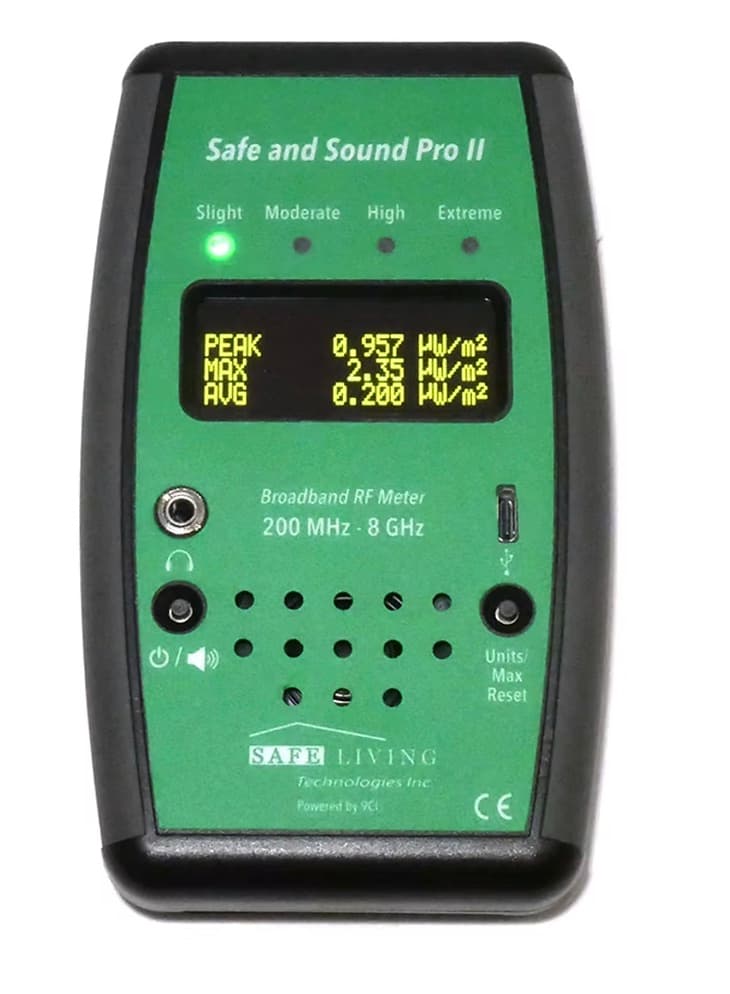
  • Safe & Sound Pro II RF meter

    Safe & Sound Pro 2

    The Safe & Sound Pro II is a consumer-level RF meter designed to measure radiofrequency emissions from sources such as Wi-Fi, mobile devices, smart technology, and background RF in the built environment. It's well suited to home assessments where usability, transparency, and practical accuracy matter.

    Specifications

    Measurement Type
    Radiofrequency (RF) electromagnetic fields
    Frequency Response
    200 MHz - 8 GHz (±6 dB performance approx. 400 MHz - 7.2 GHz)
    Measurement Units
    µW/m² (microwatts per square metre)
    Sensor Design
    Single-axis antenna (orientation matters)
    Detection Method
    Broadband RF detection (non-frequency-specific)
    Display & Feedback
    LED light scale, numeric display, audible signal (mute option)
    Response Type
    Fast peak-response for variable RF signals
    Primary Use
    Screening and comparison of RF from Wi-Fi, mobile devices, and smart technology
    Power
    Battery powered (portable use)
  • TriField TF2 EMF meter

    TriField TF2

    The TriField TF2 is a consumer-level EMF meter designed to measure low-frequency AC magnetic fields and electric fields commonly associated with household wiring, appliances, and electrical infrastructure. It's a practical screening tool for understanding low-frequency fields in residential environments.

    Specifications

    Measurement Types:
    AC Magnetic Fields & AC Electric Fields
    Frequency Range:
    40 Hz - 100 kHz

    Measurement Units:

    Magnetic Fields:
    mG / µT
    Electric Fields:
    V/m
    Sensor Design:
    Single-axis measurement (orientation matters)
    Measurement Modes:
    Switchable between magnetic and electric field modes
    Display:
    Digital numeric readout with mode indicator
    Response Type:
    Real-time spot measurements
    Primary Use:
    Screening and comparative assessment of low-frequency fields in buildings
    Power:
    Battery powered
    Typical Applications:
    Household wiring, appliances, and electrical infrastructure

Combo Kit - 3 Day Hire

Our EMF 3 day hire kit includes:

  • Safe and Sound Pro II RF Meter for measuring radio frequency (RF) exposure.
  • TriField TF2 Meter for measuring AC magnetic fields and AC electric fields from household electrical systems and appliances.

3 Day Hire Conditions

Hire professional EMF testing equipment for a 3-day assessment period, giving you enough time to properly test and understand your environment.

  • 3-day hire period - Have the meter for 3 days, conduct a thorough assessment at your own pace
  • Flexible scheduling - hire dates arranged based on meter availability and your preferred timing
  • Instructional video on how to use meter
  • Fully refundable deposit required - refunded upon return of the meter in good working condition

This service is ideal for those wanting to carry out their own EMF testing with reliable, high-quality equipment.

Contact Us

"*" indicates required fields

Your details are sent to Xpanded Concepts so Ryan can respond to your enquiry. Read our Privacy Policy.